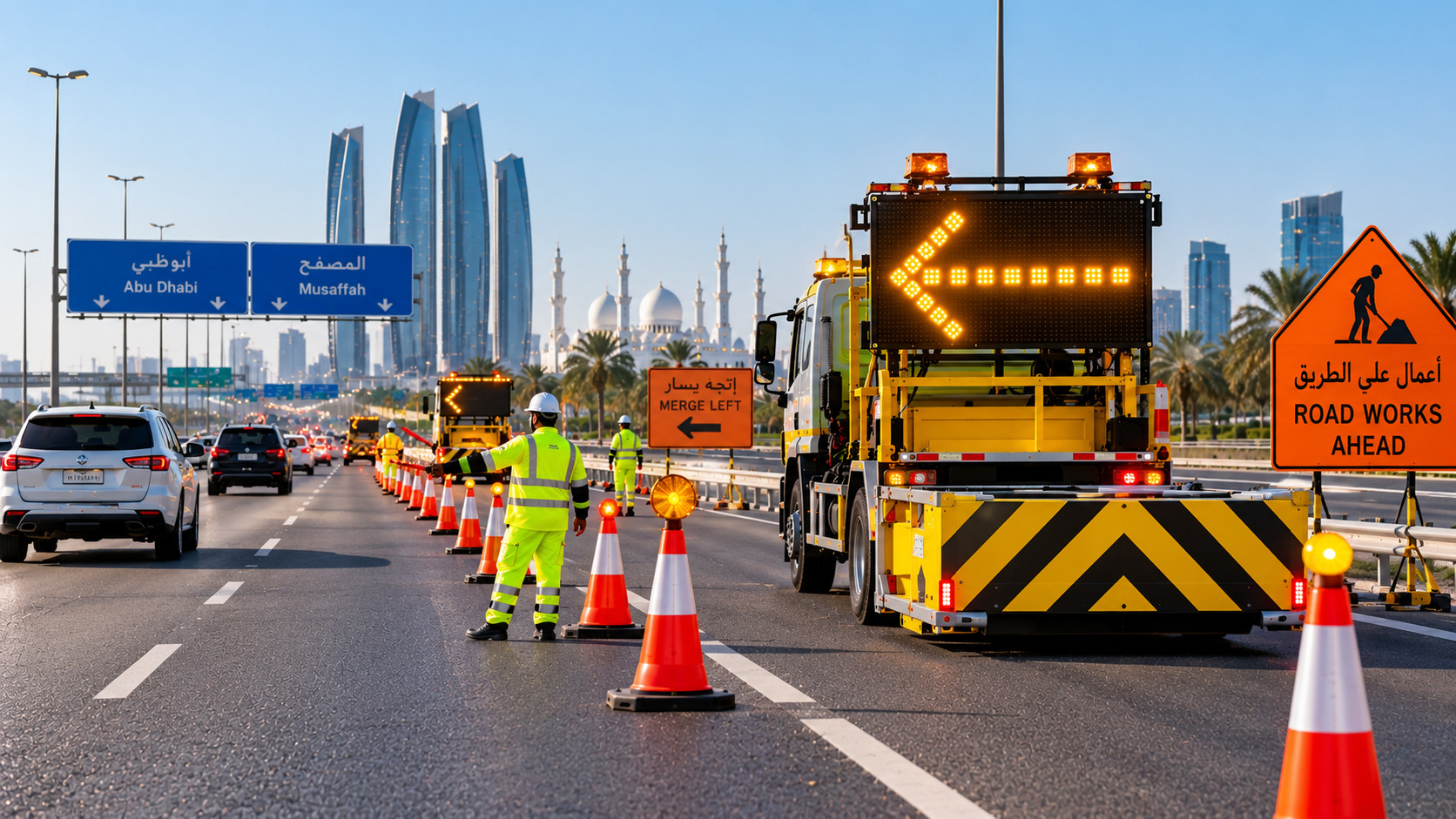
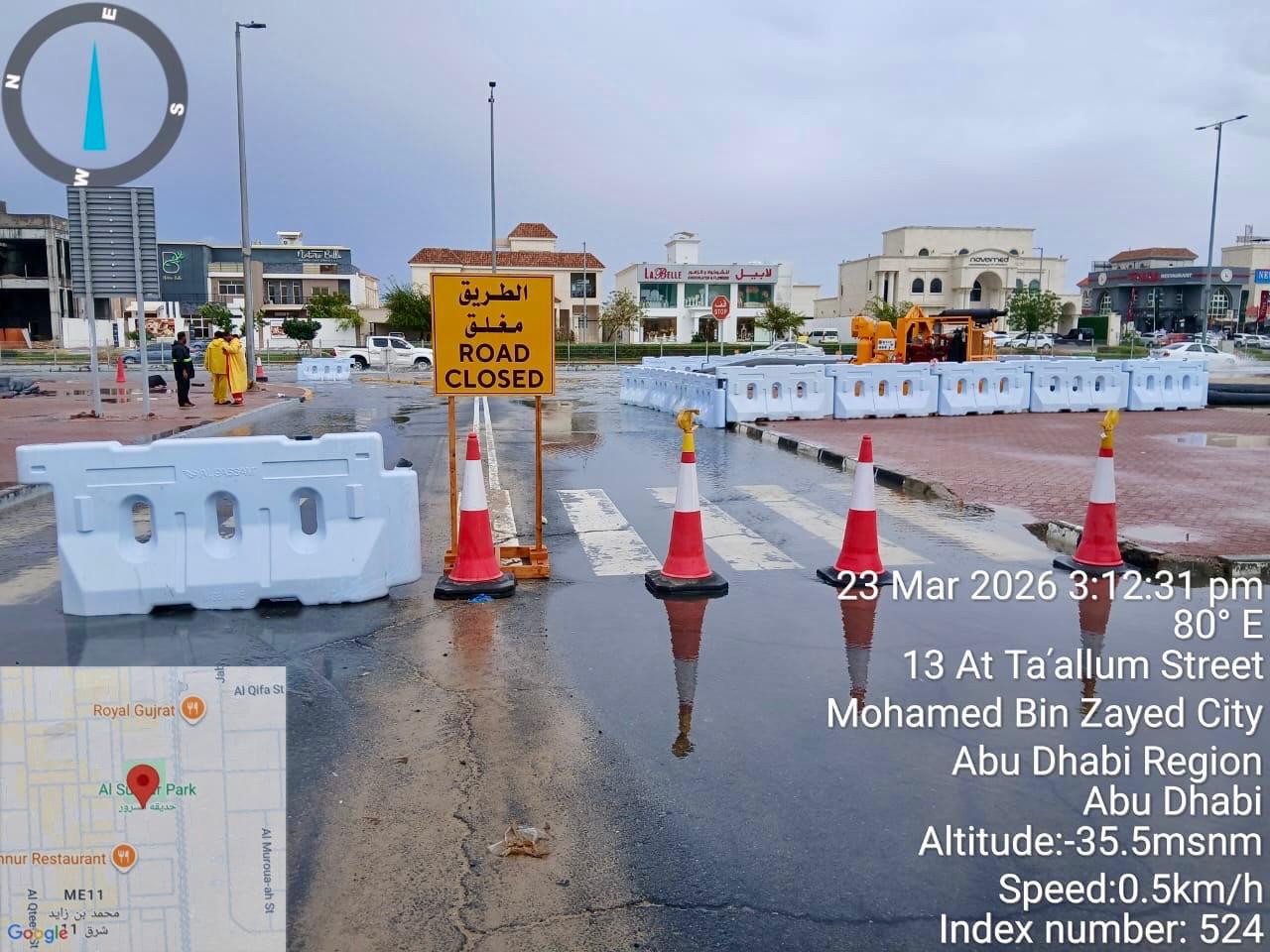
Construction and infrastructure projects are essential for Abu Dhabi's continued growth and development. However, these projects must be executed with minimal disruption to traffic flow while maintaining the highest safety standards for both workers and road users.
## The Importance of Professional Traffic Management
Effective traffic management during construction is not just a regulatory requirement – it's a critical component of project success. Poor traffic management can lead to accidents, delays, public frustration, and even project shutdowns by authorities.
### Legal Requirements in the UAE
The Abu Dhabi Department of Municipalities and Transport (DMT) has strict guidelines for traffic management during construction. All projects affecting public roads must:
- Submit comprehensive traffic management plans for approval
- Use certified traffic control devices
- Employ trained traffic management personnel
- Implement proper signage and warnings
- Maintain safe access for emergency vehicles
## Key Components of Traffic Management Systems
### 1. Traffic Control Devices
Road Shield provides a complete range of traffic control equipment:
**Traffic Cones**: Available in various sizes (450mm, 750mm, 1000mm), our heavy-duty PVC cones with reflective collars ensure maximum visibility day and night. They're weighted to withstand Abu Dhabi's strong winds while remaining easy to deploy and relocate.
**Safety Barriers**: Our water-filled and concrete barriers create secure work zones, protecting both construction workers and passing motorists. They're designed to meet international safety standards and can be configured for various road layouts.
**Warning Signs**: High-visibility traffic signs alert drivers to upcoming hazards, speed limits, lane changes, and detours. All signage must be reflective and positioned at appropriate distances based on road speeds.
**Temporary Traffic Lights**: For major intersections or lane closures, temporary traffic signal systems help maintain orderly traffic flow while allowing construction activities.
### 2. Lane Closure Management
Proper lane closure requires careful planning:
**Advance Warning**: Drivers must receive adequate warning through a series of signs starting 500-1000 meters before the closure, depending on road speed.
**Taper Design**: The transition area where lanes merge must be properly designed with appropriate taper length based on traffic speed and volume.
**Work Zone Setup**: The actual work area must be clearly defined and protected by barriers, with additional protection for workers in high-risk areas.
**Termination Area**: After the work zone, proper signage guides traffic back to normal lane usage.
### 3. Detour Planning and Implementation
When full road closures are necessary, detailed detour planning is essential:
- Alternative routes must be clearly marked
- Detour routes should be surveyed to ensure they can handle additional traffic volume
- Signs must be installed at all decision points
- Travel time estimates should be communicated to the public
- Coordination with traffic management centers for real-time updates
## Night Work Considerations
Many major projects in Abu Dhabi are conducted at night to minimize traffic impact. Night work requires additional safety measures:
- Enhanced lighting of work zones
- Extra reflective elements on all equipment and barriers
- Reduced work zone speeds
- Increased visibility requirements for workers
- Additional warning signs with flashing lights
## Technology Integration
Modern traffic management increasingly relies on technology:
- Variable Message Signs (VMS) provide real-time updates to drivers
- Traffic monitoring cameras help assess flow and identify issues quickly
- GPS tracking of traffic management equipment ensures proper placement
- Mobile apps can alert drivers to construction zones in advance
## Worker Safety Protocols
Protecting construction workers is paramount:
- All personnel in traffic areas must wear high-visibility clothing
- Regular safety briefings address specific hazards
- Emergency evacuation procedures must be established
- Communication systems allow immediate response to incidents
- Regular inspection of all safety equipment
## Minimizing Public Impact
Successful projects balance construction needs with public convenience:
**Communication**: Early and frequent communication with the public about closures, detours, and expected completion dates builds understanding and cooperation.
**Phasing**: Breaking projects into phases can reduce the scale of disruption at any given time.
**Timing**: Scheduling disruptive work during off-peak hours or coordinating with other projects to avoid multiple simultaneous closures in an area.
**Quality Control**: Ensuring work is done right the first time prevents need for repeated closures.
## Emergency Access
Maintaining emergency vehicle access through construction zones is critical:
- Routes must be clearly marked for emergency services
- Minimum lane widths must be maintained
- Response time impacts must be minimized
- Coordination with emergency services departments
## Road Shield's Comprehensive Solutions
At Road Shield, we provide end-to-end traffic management services for construction projects of all sizes:
- Site assessment and traffic management plan development
- Supply of all necessary traffic control equipment
- Professional installation and maintenance
- Trained flaggers and traffic controllers
- 24/7 emergency response and support
- Post-project removal and site restoration
Our experience with Abu Dhabi's unique challenges – from extreme heat to sandstorms to diverse traffic patterns – ensures your project maintains safety and compliance while minimizing disruption.
## Conclusion
Professional traffic management is an investment in project success, public safety, and corporate responsibility. By partnering with experienced providers like Road Shield and following established best practices, construction projects can proceed safely and efficiently while maintaining positive relationships with the community and regulatory authorities.